














The Complete 2026 Guide: Choosing the Best Web Development Software and Tools
Behind every business is a fast, responsive, high-performing website that brings the project to life. It is one of the central pillars for any business, and we can say that it is more than just a brochure for any business. For any business, a website is a core for their brand's digital identity and the growth engine on SERP for sales, better ROI, and huge traffic. This is where Business Website Development and SEO Growth work together, helping businesses build a strong digital foundation while improving their visibility and ability to attract customers.
For any developer or business, choosing the right web development tools is one of the most important decisions. Because tools are not just tools-they are helpful for project speed, code quality, or long-term scalability. If you are looking for any web development agency in the U.S. then explore our blog on : Finding the Best Web Development Agency in the USA for 2025.
Here in this guide, we are going to help you find out about the best web development software in 2026, explaining their roles in modern application architecture, and sharing insights from industry experts while highlighting how Web Development Tools shape modern workflows.
What is Web Development Software?
The web development software provides a set of included frameworks, applications, and programming languages that assist in building, deploying, managing, and maintaining websites. Its main function is to facilitate the developer's ability to quickly write, debug, and optimize code & assure that websites perform seamlessly across all devices and browsers. For a deeper understanding of design direction, check out “Web Design Trends That Win Clients in 2025".
In general, web development software includes the following categories:
- The front-end tools: used to design and manage the UI (User Interface) and UX (User Experience) integrate elements like HTML, CSS, & JavaScript frameworks.
- Back-End Tools: These are used for powering the application logic, database management, and server-side operations, using tools such as Node.js, Django, or Laravel.
- Full-stack tools: Use platforms that allow for the combination of both the front-end and back-end of the application, such as MERN/MEAN Stacks or Next.js.
- IDEs & Editors: They provide coding environments or integrated development environments, best for writing, debugging, and testing code. For example, VS code.
- Collaboration & DevOps: These tools are best for managing code versioning, team workflow, and automated deployment. For example, GitHub, GitLab.
Together, these categories form the foundation of modern Web Development Tools that developers rely on daily.
Top Web Development Software and Frameworks in 2026
Here is a list of the best tools and frameworks that will dominate the web development software market in 2026:
1. Must-Have Software for Front-End Development
The front-end is important for the user experience oModern interfaces are heavily influenced by evolving Web Development Tools focused on speed and component-based architecture.
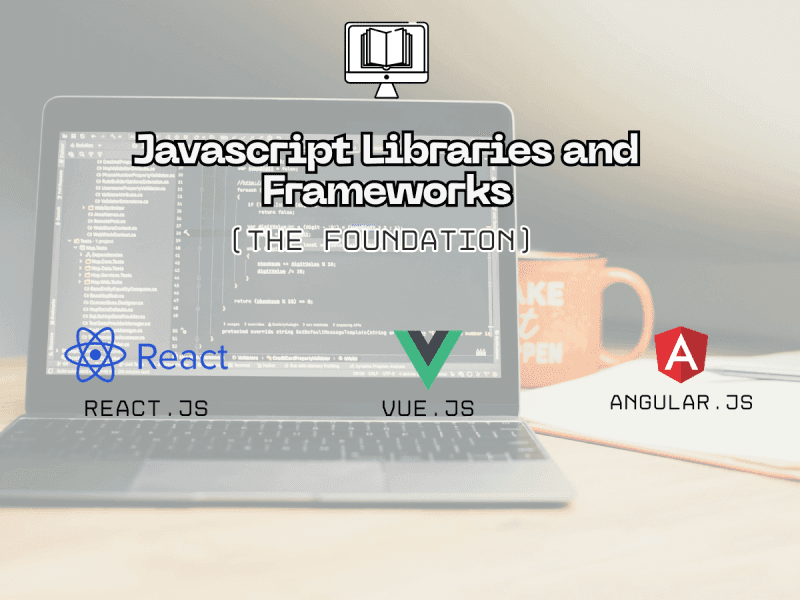
JavaScript Libraries & Frameworks (The Foundation)
- React.js: Go-to Component Library.:React.js is the undisputed leader in the market, highly efficient, and scalable; it plays an important role in the development of dynamic and high-performance websites. React.js is ideal for building enterprise web development software solutions on large-scale and startup scale.
- Vue.js: Lightweight and Flexible.: Vue.js is favourite for building fast and modern front-end. It continues to be in rapid adoption due to its hollow learning curve and impressive integration capabilities.
- AngularJS is the SPA powerhouse: tough, Google-backend, highly structured, and powerful for building single-page applications with lots of features-especially where structure and two-way data binding is a priority.
CSS Frameworks (Styling & Design)
- Tailwind CSS: Utility-First Design - The 2026 Standard. Being the most popular utility-first CSS framework, Tailwind enables developers to build completely custom, responsive designs at incredibly high velocities by utilizing a set of predefined classes directly within their HTML markup, highly reducing CSS bloat.
- Bootstrap: Rapid Prototyping Classic. Still highly relevant today, Bootstrap has been the classic method of rapidly prototyping mobile-first websites due to its great library of pre-designed, consistent components.
If you're starting front-end coding, the guide “Flexbox Made Simple: A Beginner’s Handbook” can help simplify layout fundamentals.
2. Powerful Back-End Web Development Software
The back-end powers the critical business logic, security, and data flow. Choosing the right back-end web development software is essential to scalability.
- Node.js: is a JavaScript Runtime and forms the basis of most modern real-time applications and APIs. Node.js enables a developer to utilize one language (JavaScript) throughout the entire stack, which hugely optimizes efficiency for the team.
- Express.js: is a minimalist and flexible Node.js web application framework, best for building RESTful APIs and server-side applications rapidly.
- Django (Python): The Secure, "Batteries-Included" Framework. Known for its high speed, robust security features, and "batteries-included" philosophy, Django provides everything necessary for complex web applications right out of the box.
- Laravel (PHP): Elegant and Productive. Laravel dominates the PHP ecosystem, making it the easiest way to write back-end code in an elegant syntax that provides extended built-in tools and quick database management.
- Ruby on Rails: Convention Over Configuration. Appreciated for its developer-friendly conventions and speed, it remains a very good choice for startups and for the swift launch of Minimum Viable Products.
3. Integrated Full-Stack Web Development Software Stacks
Full-stack solutions come with integrated front-end and back-end for efficiency, often powered by modern Web Development Tools ecosystems.
- Next.js: The SEO and Performance Leader Next.js is a React-based framework that empowers developers to build high-performance and SEO-friendly web applications. It provides simplicity for complicated tasks like Server Side Rendering (SSR) and Static Site Generation (SSG), making it one of the top choices for commercial websites. If you want to understand mobile rankings better, refer to “The Ultimate Guide to Understand Mobile-First Indexing.” It’s crucial due to its strong SEO performance.
- MERN Stack: MongoDB, Express.js, React, Node.js. The most popular JavaScript stack that provides flexibility and development speed by utilizing JavaScript across all layers of the application.
- Django + React: A powerful, hybrid stack that leverages Django's secure and robust back-end to handle data management and logic, while combining it with modern dynamic front-end capabilities of React.
- Laravel + Vue.js: Provides a seamless, highly productive developer experience; often used for mid-size projects needing strong integration between the front and back.
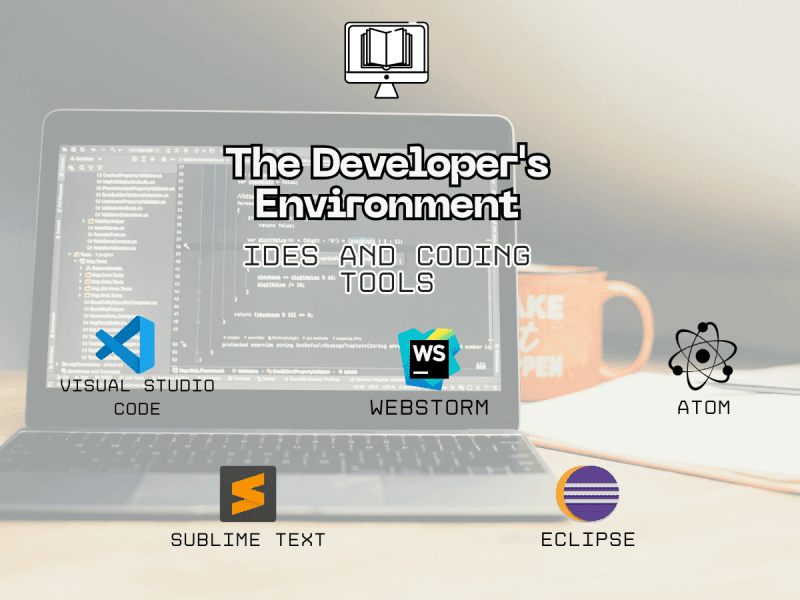
The Developer's Environment: IDEs and Coding Tools
The code will be written, debugged, and tested within the IDE. It is very important to have the proper environment to guarantee productivity among developers.
- Visual Studio Code: The Unquestioned Market Leader. Free, extremely extensible, and fantastically versatile, VS Code has to be the number one choice for virtually every modern web developer due to the massive library of extensions supporting every major language and framework.
- WebStorm: fine-tuned for professional JavaScript and TypeScript development, providing top-notch, intelligent code completion, refactoring, and deep code insights.
- Sublime Text: A lightweight, speed-focused text editor perfect for the developer who values simplicity and raw performance over a heavier IDE.
- Atom: A feature-rich and customizable, open-source editor. It excels in collaboration for development teams.
- Eclipse: Still preferred for enterprise-level applications, especially those built using Java or C++ on the server-side.
Project Management, Version Control, and Collaboration Software
With modern team development, collaboration and version control are just as important as the coding language itself.
GitHub: The Backbone of Collaborative Coding. It hosts and manages version control, issue tracking, and the development lifecycle.
GitLab: extends Git hosting with native CI/CD pipelines that automatically test and deliver changes: the core principles of DevOps.
Bitbucket: This is often preferred for private repositories, and it integrates well with other Atlassian suite tools, such as Jira.
Trello & Jira: Simple, visual project management boards-Trello-and advanced, integrated agile tracking systems-Jira-used for coordinating development tasks and sprints.
Slack: Industry standard for real-time team communication, keeping all developers and stakeholders in sync on multi-phase projects.
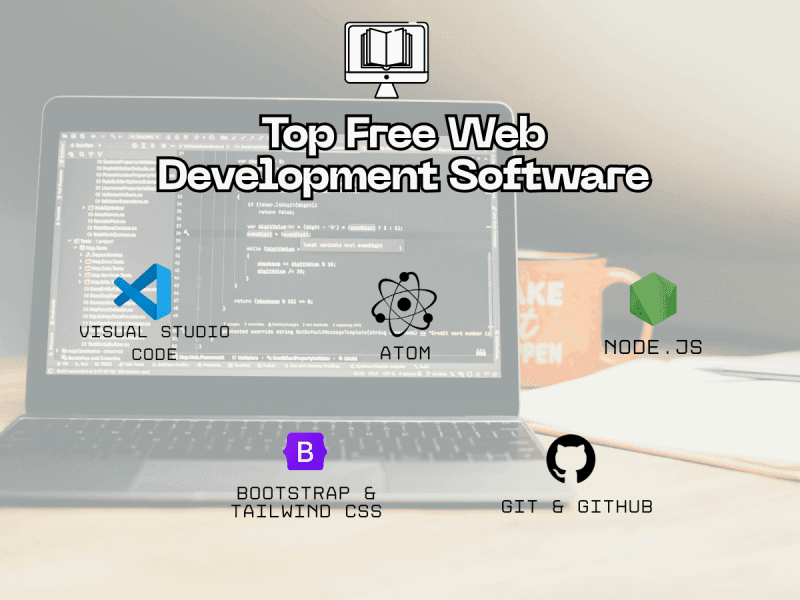
Is There Free Web Development Software? (The Open-Source Advantage)
Yes! One of the best advantages of modern web development tools is that many of the most powerful tools are entirely free and open-source. This accessibility drastically lowers the barrier to entry for beginners and significantly reduces project costs for agencies.
Top Free Web Development Software:
- Visual Studio Code: The premier IDE, completely free and open-source.
- Node.js: is an open-source JavaScript runtime environment.
- Bootstrap & Tailwind CSS: free, open-source front-end CSS frameworks.
- Git & GitHub: represent the free system of version control and, correspondingly, the main platform of repository hosting.
- Atom: is a 100 percent open source and highly customizable text editor.
This foundation of free tools empowers professionals like Justo Consulting LLC to deliver high-quality, cost-effective solutions without compromising performance.
Choosing the Right Web Development Software Stack: The Crucial Role
The question of which web development software to use is a high-stakes one. The "right" stack ensures technical alignment with business goals.
The Impact of Software Choice:
- Scalability: A modern, robust framework such as Django or Next.js ensures the website will manage enormous traffic and complex features without needing an expensive rebuild.
- Security: Laravel and Django have built-in security features reducing the chances of common web vulnerabilities to almost nil.
- Development Speed: Integrated tools, such as full-stack frameworks-MERN/MEAN-and fast IDEs-VS Code-accelerate workflows and hence time-to-market.
- Hiring & Maintenance: Picking well-documented popular web development software such as React and Node.js significantly simplifies the recruitment of skilled developers while providing long-term maintenance of code.
For small businesses especially, choosing the right stack is critical for long-term health. If you're a small business owner, you may also want to read “The Importance of Website Maintenance for Small Businesses.” Ongoing Managed Services can further help businesses maintain performance, security, updates, and long-term website reliability after development is complete.
Final Thoughts on Web Development Software in 2026
The 2026 landscape of web development software is balanced by the pursuit of speed, elegant design, rock-solid functionality, and flawless user experiences. Having the right mix of all these web development tools empowers teams to deliver not just functional websites but innovative, responsive, and high-performing digital platforms, which adapt to continuous changes in user demands.
Modern, integrated web development software, from the utility-first approach of Tailwind CSS through to the full-stack power of Next.js, is no longer optional for companies serious about going online with a secure, scalable performance website. Justo Consulting LLC is among agencies leading this charge, marrying the right cutting-edge software with proven expertise to ensure your investment translates into measurable, long-term business results.
If you have questions or need personalized guidance, feel free to reach out through our contact us page