
















How to Rank Higher on Google: 9 SEO Tips That Work
Want to improve your site ranking on Google? Start by understanding what your audience searches for, creating useful content, and making sure Google can access and understand your pages.
There is no guaranteed shortcut to higher rankings. However, consistent SEO improvements can help search engines understand your website and help visitors find the information they need.
Quick answer: To rank higher on Google, target relevant keywords, publish helpful content, improve on-page SEO, earn quality backlinks, fix technical issues, make your website mobile-friendly, and monitor performance regularly.
1. Find the Right Keywords
Keyword research helps you understand what people search for and how your content can meet their needs. Instead of choosing keywords only because they have high search volume, focus on relevance and search intent.
For example, someone searching for “what is email marketing” wants an explanation, while someone searching for “email marketing services” may be looking for a provider.
How to find relevant keywords
- Use Google Keyword Planner to explore search terms and estimated search demand.
- Check Google Search Console for queries that already bring visitors to your website.
- Review Google's autocomplete suggestions and related searches for additional ideas.
- Study competing pages to identify useful topics you may have missed.
If you want to know website ranking for relevant search terms, start by checking which queries already generate impressions and clicks in Google Search Console. This gives you a useful starting point for understanding how your content performs.
Choose one primary keyword for each page and include related terms naturally in the title, headings, introduction, and body where relevant. For further guidance, Google's SEO Starter Guide explains the fundamentals of making website content easier for search engines to understand.
2. Create Helpful, Relevant Content
Google rankings depend on many factors, but useful content is essential to a strong SEO strategy. Your page should answer the visitor’s question clearly and provide enough information to help them take the next step.
Before writing, review the pages currently appearing in search results. Look at the questions they answer, the information they include, and the gaps your content could fill.
To improve your content:
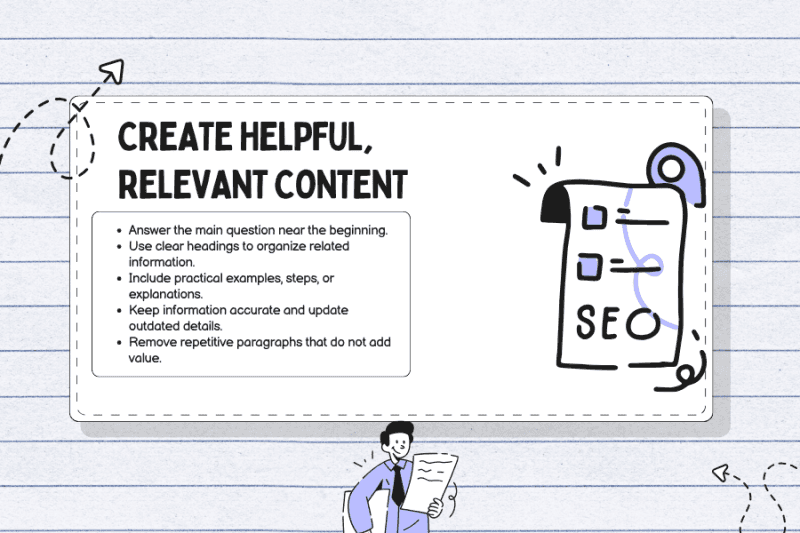
- Answer the main question near the beginning.
- Use clear headings to organize related information.
- Include practical examples, steps, or explanations.
- Keep information accurate and update outdated details.
- Remove repetitive paragraphs that do not add value.
Practical example: If you are writing about website SEO, do more than explain keyword research. Show readers how to identify a relevant search term, where to use it, and how to measure whether the page is attracting the right visitors.
Google's guidance on creating helpful, reliable, people-first content is a useful reference when reviewing whether your content genuinely meets readers' needs.
The goal is not simply to publish more content. It is to give readers a clear, useful answer that meets their needs.
3. Improve On-Page SEO
On-page SEO helps search engines understand the topic and purpose of each page. It also makes your content easier for visitors to navigate.
Focus on these elements:
- Title tag: Write a clear, relevant title that accurately describes the page.
- Meta description: Summarize the page and give users a reason to visit. Google may generate a different snippet for a search.
- Headings: Use a clear H1 and logical H2 and H3 headings.
- URL: Keep page URLs descriptive and easy to understand.
- Images: Use relevant images, descriptive alt text where appropriate, and optimized file sizes.
- Internal links: Link to related pages using meaningful anchor text.
Do not force keywords into every heading or paragraph. Write for people first and use search terms where they fit naturally.
4. Make Your Website Easy to Use
A website should help visitors find information without unnecessary effort. Poor navigation, intrusive pop-ups, confusing layouts, and difficult mobile experiences can make it harder for people to use your site.
Review your website from a visitor’s perspective:
- Can users quickly find the information they need?
- Is the navigation clear?
- Are buttons and forms easy to use on mobile devices?
- Can visitors complete important actions without confusion?
- Does the page display properly on different screen sizes?
A good user experience supports your broader SEO efforts, although no single design change guarantees higher rankings. Focus on making the website useful, accessible, and easy to navigate.
5. Improve Website Speed and Technical SEO
Technical issues can prevent search engines from crawling, indexing, or properly understanding important pages. A technically sound website gives your content a better chance of being discovered.
Start with these checks:
- Review Google Search Console for indexing issues.
- Test important pages with Google PageSpeed Insights.
- Check mobile layouts and responsive design.
- Fix broken internal links and incorrect redirects.
- Make sure important pages can be crawled and indexed.
- Review Core Web Vitals, including loading performance, responsiveness, and visual stability.
Use the results to prioritize fixes. For example, if a key landing page loads slowly because of oversized images, compressing those images may help improve loading performance.
Do not assume that every technical warning needs immediate attention. Focus first on issues affecting important pages, visitors, or search visibility.
6. Earn Quality Backlinks
Backlinks are links from other websites to yours. Relevant, trustworthy backlinks can help search engines understand how pages relate to the wider web and can support your site's authority.
However, buying links or creating large numbers of low-quality links can put your website at risk. Google's spam policies for Google web search explain practices that can violate its guidelines.
Practical ways to earn backlinks include:
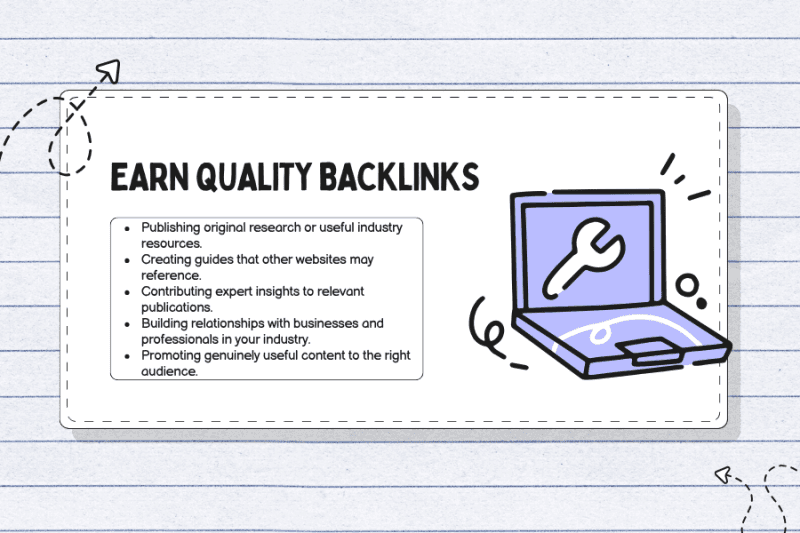
- Publishing original research or useful industry resources.
- Creating guides that other websites may reference.
- Contributing expert insights to relevant publications.
- Building relationships with businesses and professionals in your industry.
- Promoting genuinely useful content to the right audience.
For more guidance, read Justo Consulting’s article on off-page SEO and how to use it.
The focus should be on relevance and quality, not simply increasing the number of links.
7. Build a Strong Internal Linking Structure
Internal links connect pages within your website. They help visitors discover related information and help search engines find and understand your site's content.
For example, a blog explaining keyword research could link to a related guide on on-page SEO or a relevant SEO service page.
To improve internal linking:
- Link related articles and service pages where they genuinely help the reader.
- Use descriptive anchor text that explains the destination.
- Make important pages accessible from relevant parts of your website.
- Check for broken links and pages that have few or no internal links.
- Avoid adding links simply to increase their number.
A clear internal linking structure supports navigation and helps search engines discover important content.
8. Keep Content Accurate and Up to Date
Content can become less useful as information, products, industry practices, and search expectations change. Regular reviews help you identify pages that need attention.
Updating a page does not mean changing its publication date or rewriting everything. First, check whether the content still answers the intended question.
During a content review:
- Replace outdated facts and examples.
- Correct broken links and inaccurate statements.
- Add missing information that readers need.
- Improve unclear explanations.
- Remove sections that are repetitive or no longer relevant.
- Check whether the page still matches the search intent.
Prioritize pages that are important to your business or show declining performance. Make meaningful changes rather than updating content just to make it appear fresh.
9. Track Rankings and Measure SEO Performance
SEO requires regular monitoring. Reviewing performance helps you understand which pages are attracting visitors and where improvements may be needed.
If you want to check SEO ranking of site pages, start with Google Search Console's Performance report. It shows search queries, impressions, clicks, click-through rates, and average positions.
Use these tools to monitor your website keyword rankings, but do not rely on rankings alone. Search results can vary by location, device, query, and personalization, and the average position is not a fixed position every visitor will see.
To check your website's performance, focus on:
- Search visibility: Are important pages appearing for relevant queries?
- Clicks and impressions: Are people seeing and visiting your pages?
- Average position: How are your pages performing for tracked searches?
- Organic traffic: Are visitors arriving through unpaid search results?
- Conversions: Are visitors taking meaningful actions, such as submitting a form or making a purchase?
Avoid judging SEO success by one keyword or one day's results. Compare performance over time and consider seasonality, competition, search demand, and changes to your website.
SEO troubleshooting: What should you check first?
| Symptom | What to check | Practical next step |
| Low impressions | Keyword relevance, indexing, and search demand | Confirm the page is indexed and matches the intended search. |
| Impressions but few clicks | Title, snippet, and search intent | Make the title and description clearer and more relevant. |
| Traffic but few conversions | Page relevance, offer, and calls to action | Make the next step clear and align the page with visitor needs. |
| Sudden ranking decline | Recent site changes, indexing, and competing pages | Compare dates in Search Console and investigate significant changes. |
| Slow or unstable pages | PageSpeed Insights and Core Web Vitals | Prioritize issues affecting key pages and real visitors. |
| Important pages missing from search | Crawlability, indexing, and internal links | Check Search Console and link to the pages from relevant content. |
Final Thoughts
Improving your Google rankings takes consistent work across content, keywords, technical SEO, internal links, and website usability. Start by identifying the pages that matter most, review their current performance, and fix the issues most likely to affect visitors and search visibility.
If you need help identifying SEO opportunities or building a practical improvement plan, explore Justo Consulting’s SEO Growth services.