





On-Page SEO Essentials: What Every Website Truly Needs
Introduction
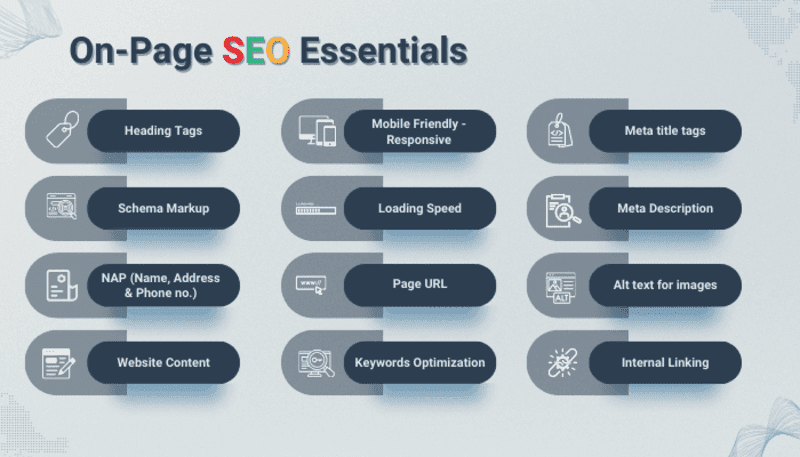
On-page SEO is an important strategy in digital marketing which is critical for optimizing elements on the website for driving organic traffic. On-page SEO plays an important role in improving your website’s ranking on search engines. There are some needy elements in on-page like optimizing title tags, internal linking, meta descriptions, keywords, etc. These elements are significant, because they are the one who makes your content understandable. So, that search engine can understand your content and index & rank it accordingly. Here in this article we will discuss On-page SEO, how it is different from Off-page SEO, and what are needy on-page factors for better optimization, especially when choosing an effective on-page seo service.
What is On-Page SEO
SEO or Search Engine Optimization is a practice or you can say a strategy which helps websites for a good ranking on search engine and driving more organic traffic. It is basically 2 types: On-page SEO and Off-page SEO. To know more about Off-page SEO visit our another blog on Off-page SEO “Off-Page SEO: What Is It & How Can You Take Advantage of It”.
On-Page SEO is an on website strategy where you have to optimize some of the website elements like title tags, meta description, keywords, content, interlinking, etc. It is mainly responsible for driving more organic traffic, better visibility and better ranking. Doing On-page SEO analysis of any website makes them more understandable for search engines which also indirectly improves the user experience. A professional on-page seo service often includes detailed seo keyword analysis to ensure better targeting.
How Do On-Page and Off-Page SEO Differ?
On-page SEO is focused on your website, so it's an on-site optimization work. For example, title tag, meta description, content, keywords, images, interlinks and external links, url structure, alt tag, etc. On-page focused on optimizing these elements because they represent your website on search engines and also in front of your audience. On the other hand Off-page SEO focussed on optimizing the external elements of your website. Like, creation of the backlinks, social media optimization, reputation management, etc.
Keep in mind that both On-page SEO and Off-page SEO plays an important role in boosting your website’s ranking and for complete SEO strategy. But you can fully control your website elements, rather than outside. If you want to improve your Off-page efforts, you can also read our detailed post on How to Rank Higher on Google: 9 Off-Page SEO Tips for practical strategies. So, starting from On-page for improving the ranking of your website is a good start and helps your website rank on keyword effectively
Let’s explore the essential components, which also act as major SEO factors.
1.Heading Tags
Heading tags helps both users and search engines to understand your content easily. Using headers like H1, H2 or H3 helps in creating hierarchy in the content and also organizes your content for better reading experience for users. Heading tags are a main element of On-page SEO, using them improves your On-page SEO analysis while it also enhances navigation and readability. For a SEO tip keep in mind that your H1 should be your primary keyword and place other keywords in H2, H3 and other heading tags after proper seo keyword analysis.
2.Schema Markup
Schema markup provides the structured data within a database. Essentially it provides a draft of the stored data like data types, fields, tables, etc. It helps search engines in classifying content.
It is also one of the reasons for accurate results from the search engines. Schema markup used to provide ratings, featured snippets, carousels and other results in search. Adding Schema Markup in your website and content can be helpful in driving more organic traffic and increased visibility. It is one of the important parts of any on-page seo service strategy.
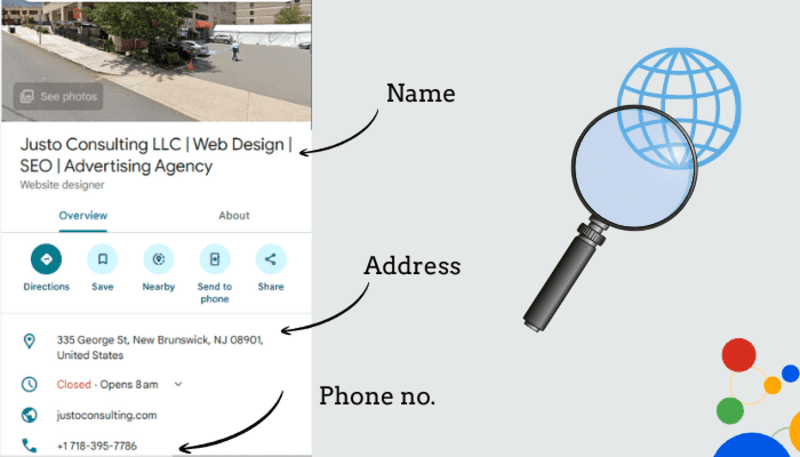
3.NAP (Name, Address & Phone no.)
Name, address and phone no. are important for your business. NAP helps your customer to reach you and trust your business. Also google wants evidence that you are true and your organization is real not fake. So, just make sure that your NAP is available and consistent on all the online platforms like local listing, directories, social media profile and obviously on your website. Keep in mind that if your NAP is inconsistent at all platforms then it can confuse users and search engines & harms your SEO as well. This is often checked during a thorough On-page SEO analysis along with meta tags consistency.
4.Website Content
Content is the main thing on any of the websites. Also in SEO it plays a crucial role for engagement and for ranking. Create high quality content which can match the search intent of your ideal audience. Add your target keyword in them for better visibility. Add all keywords strategically in all over the content. Optimized content is a major focus of any on-page seo service and supports your website rank on keyword performance.
5.Mobile Friendly - Responsive
According to a survey there are more than 7.21 billion mobile users in all over the world. So, if your website is not mobile friendly and responsive then you are ignoring a huge size of audience. Also google prioritises mobile first users, it values those who are seamless on all types of screens. In laymen's language mobile first responsiveness is important for any website. As part of your On-page SEO analysis strategy keep a check on mobile first responsiveness. You can use Google lighthouse tool for checking its responsiveness and other things.
6.Loading Speed
Site speed matters most, because if your site speed is slow then people may leave early. it drives more bounce rate and also hurts your ranking on search engines. Some of the tools like google pagespeed insights are best to test the page speed. This tool will help you know the loading speed of your website on both Desktop and mobile, also they show the core web vitals. Which are important for the loading speed of the website.
Core web vitals are important website metrics which Google uses for page speed measure and visual stability. Improving loading speed is a key part of any on-page seo service and helps improve website rank on keyword results.
7.Page URL
When a crawler comes to your page, one of the first things he does is look at your page URL. For maximizing impact of your content You should optimize your page URL. An Optimised URL is important, it allows search engines to crawl through your website efficiently and makes the navigation more efficient for the users. The URL of the website should contain keywords, which are easy to understand. This is helpful to get more clicks and traffic on websites also it is essential for On-Page SEO.
While optimizing URLs there are some things which you should keep in mind. First, do not use dates or any number in the URL, Second- use hyphens to separate words in the URL and third, do not use any special character as well.
8.Keywords Optimization
Content is the most important aspect for Google. So, keyword optimization still holds an importance in the era of NLP (Natural language processing). While keyword stuffing is now a boring topic. but some of the things are changed in the keyword search as well. like giving priority to keywords according to search intent and natural language processing. Optimize your website's content carefully. Keyword optimization is an important strategy for any strategist, they play an important role on search engines. Nowadays, Keywords related with search intent, natural language & Long Tail Keywords are more important in content creation and are a better fit against the user's search pattern. Optimising the website content in keywords will bring the more audience on the website and also helpful in On-Page SEO, especially after proper seo keyword analysis to align with user intent.
9.Meta title tags
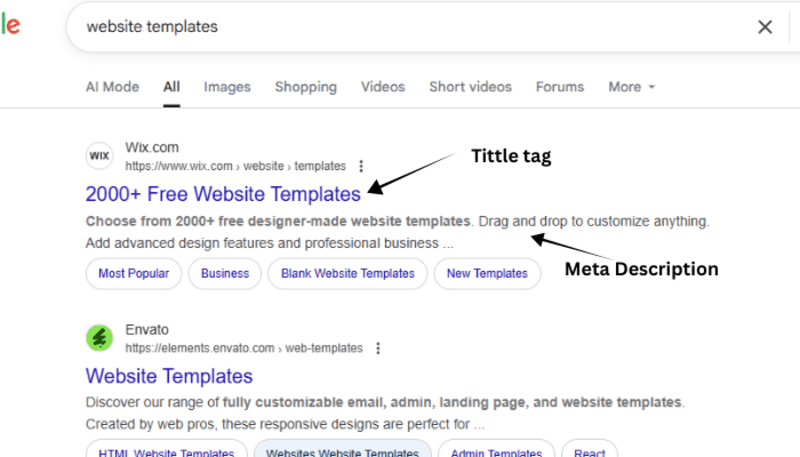
Title tags are one of the evident On-page Ranking factors. They are actually HTML elements which are responsible for any page’s title on search engines. H1 explains the Title of the Web Page, it should be short, clear, and crisp the ideal length is 50-60 characters. Title Tags are important for increasing your website's ranking in search engines, and helpful in On-Page SEO. Also make sure that each page of your website should have its own title and properly optimized meta tags for better performance.
10.Meta Description
Meta description is a short description about your content; these are another HTML element. Generally, They do not influence the SERP ranking, but are important for clicks. If your description is worthy and content is important then your audience will click on it. you should match the query intent of your audience. A Meta Description should be short & descriptive, ideal length is 160 characters, also add call-to-action like call today, shop now or explore more. Well-optimized meta descriptions are essential On-page SEO elements and part of effective meta tags strategy.
11.Alt text for images
Image Alt text is text for images only. These are helpful for those who are visually impaired. Also with these search engines it is easy to crawl your image and understand these. Google rank content, website, videos and images as well, if your alt-text for image is well optimized then there is a chance that your image can be ranked. If this happens then it can help you to generate clicks on your website. So, optimize it with the important keywords related to the content and your niche. Alt text is an important key of On-page SEO elements.
12.Internal Linking
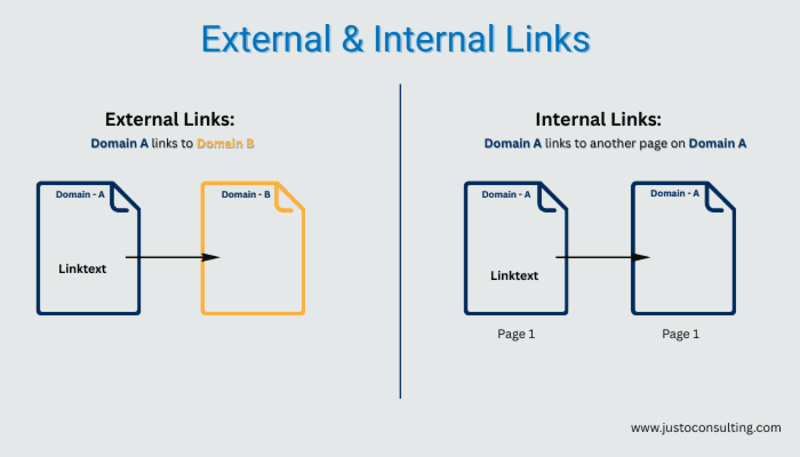
Internal linking is one of the best on-page SEO strategies, which any marketer can do. It makes website navigation easier and joins together associate pages of the same site. It helps in the ranking of an important page to other pages on the website. Internal Linking helps in web crawls, discover the key pages of the website and rank them easily in search engines.
They are important for building topical clusters as well and creating importance of the page. Interlinks also help in passing the link juice to underperforming pages, so that their ranking chances can be increased. Regularly check all interlinks of your website, and if any link is broken, then replace them with working links. So, that user experience should not impact.
13.External Linking
External linking helps in building trust, boosts credibility. It provides a ground to search engines about your content, that it is well researched and has credible information. This makes your content valuable and authoritative. As a SEO expert, you should perform External linking as one of the main SEO strategies. In this you should link your pages to higher authority and high-quality pages, so that search engines understand your website's niche and subject. And, finally increase the authority of website pages. This also complements your on-page seo service.
Enhance Your Website’s Ranking with On-Page SEO
Now, with the above blog you can understand how much on-page SEO is important. All market places are slowly changed in a digital world and so you have to as well. Keep sharpening your on-page SEO strategies, Because it's not optional it's a needy thing. It will help you for more visibility, traffic and authority. On-page can strengthen the foundation of your website and make it easy for both users and search engines while improving your website rank on keywords.
Spend your time and effort on strong on-page SEO practices, so that your website's search ranking will be high and user experience can be more engaging. Contact Today for well known on-page seo service. strategies to Justo Consulting. Here our SEO Executives are well known with all kinds of tactics which can be helpful for your website's ranking using advanced meta tags and seo keyword analysis. Get a free consultation for your website!